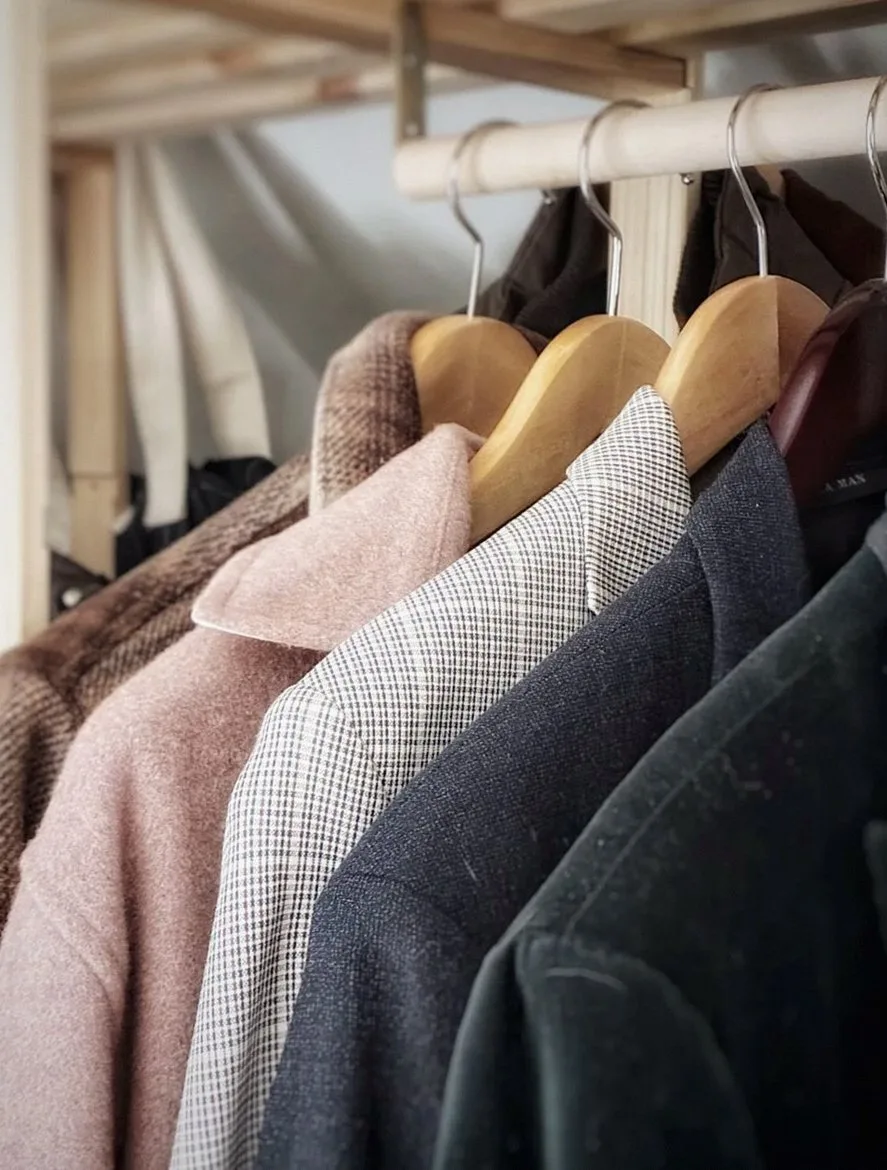
Boiled wool has a reputation for being difficult, and most of that reputation is unearned. The felting process that gives boiled wool its density also makes it relatively resistant to the things that ruin other wools: pilling, stretching, moisture. What it does not forgive is heat and agitation. Those two things, applied together, will shrink a coat that cost you several hundred dollars into something unwearable.
01 What boiled wool actually is
Boiled wool is a woven or knitted wool fabric that has been subjected to controlled heat and moisture until the fibres felt together into a dense, stable structure. The process is irreversible, which is why the fabric holds its shape so well. It also means that any further exposure to heat and agitation will continue the felting process, which is not something you want to happen to a finished garment.
The weight of the fabric, measured in grams per square metre, tells you a lot about how it will behave. Lighter boiled wools, around 300-400gsm, drape more and are better for structured jackets. Heavier weights, 500gsm and above, are stiffer and more coat-like. The field coat we carry from the Basque Country atelier is 600gsm, which is at the heavier end of what is practical for a wearable garment.
02 Washing: what to do and what not to do
The safest approach is spot cleaning for anything that is not a full soaking. A damp cloth and a small amount of wool-specific detergent will handle most marks without requiring you to wet the whole garment. If the coat genuinely needs a full wash, hand wash in cold water with minimal agitation and a detergent formulated for wool. Do not wring it.
Machine washing is possible on a wool or delicate cycle with cold water, but it introduces more risk than hand washing because you cannot control the agitation precisely. If you do use a machine, put the coat in a mesh laundry bag and use the shortest cycle available. Never use a dryer.
- Spot clean first, wash the whole garment only when necessary
- Cold water only, always
- Wool-specific detergent, used sparingly
- No wringing, no dryer, no direct heat source
- Dry flat on a clean towel, reshaped while damp
03 Storage between seasons
Boiled wool does not need to be stored in a garment bag, but it benefits from being folded rather than hung for long periods. Hanging a heavy coat on a single hook will eventually distort the shoulders. Fold it along the natural seam lines and store it somewhere with reasonable airflow.
Cedar blocks are a reasonable moth deterrent and will not damage the fabric. Mothballs work but leave a smell that is difficult to remove. If you find moth damage, a tailor can often repair small areas of boiled wool more successfully than with other fabrics, because the felted structure holds a patch well.
Boiled wool rewards a little attention early and very little attention after that. Most of the coats we have sold since 2006 are still being worn by the people who bought them.